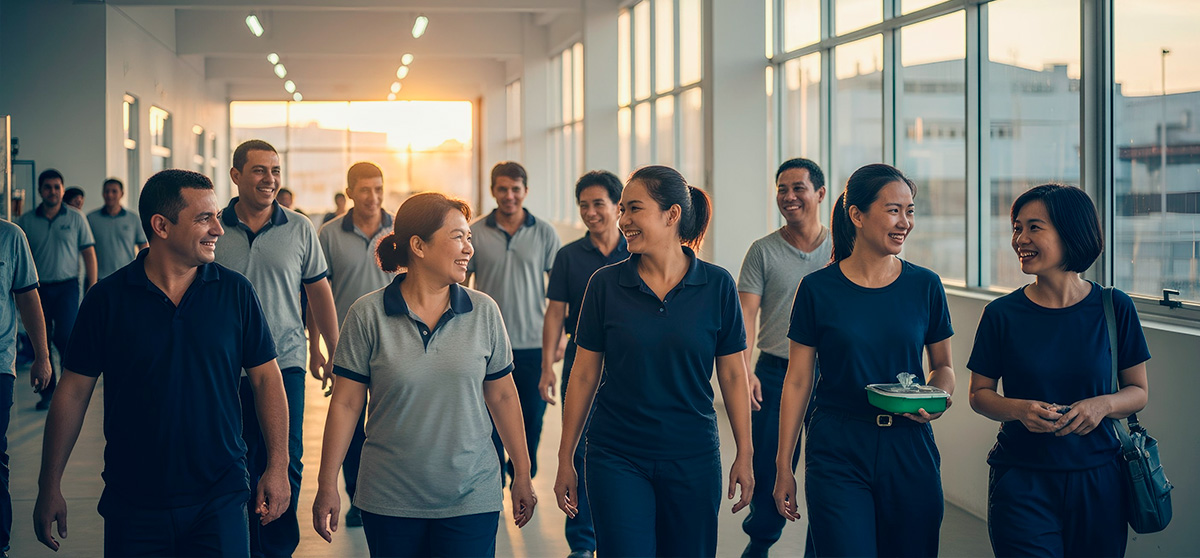
Understanding Your Rights: Key Changes in Working Conditions in Japan Toward 2026
Working in Japan today requires more than effort alone.
It requires understanding how the system is changing.
In recent years, Japan’s labor environment has been evolving with a focus on
digitalization, worker health, and work-style reform.
Whether you are a temporary worker, full-time employee, or factory worker,
these changes have a direct impact on your income and daily work life.
1. Health Insurance and My Number Integration
One major change is the digitalization of the healthcare system.
Since the end of 2024, paper health insurance cards are no longer issued,
and the use of the My Number Card as a health insurance ID has expanded.
-
Hospitals and clinics increasingly use the My Number Card to confirm insurance eligibility.
-
If your insurance is not yet linked, contact your company’s HR department or local city office.
-
For those without the card, a Qualification Confirmation Certificate is available.
By 2026, this system is expected to be the standard, not the exception.
2. Paid Leave: Understanding the System Matters
Paid leave is a legal right.
However, payment calculations may vary depending on company rules.
-
After six months of continuous employment with at least 80% attendance, paid leave is granted.
-
If your salary seems lower when taking leave, review:
company regulations, payslips, and calculation methods.
The key point is not only having leave,
but understanding how it is paid.
3. Rest Time Between Shifts
To address excessive working hours,
the concept of rest intervals between shifts is gaining attention.
-
Guidelines suggest securing around 11 hours of rest between shifts.
-
Actual implementation depends on each company,
but excessive consecutive shifts are increasingly questioned.
When work feels too demanding,
it is important to look at the system itself, not just endure it.
4. Minimum Wage Continues to Rise
Japan’s minimum wage has been increasing in response to rising living costs.
-
The national average continues to rise, and toward 2026,
¥1,100–¥1,150 per hour is often cited as a reference range. -
Metropolitan areas such as Tokyo and Kanagawa tend to be higher,
while other regions remain closer to the national minimum.
Always confirm that your wage meets the current minimum for your prefecture.
5. Overtime and After-Hours Communication
Worktime management is under closer scrutiny.
-
Work on legal holidays requires premium pay under labor law.
-
After-hours work-related messages via apps are increasingly being reconsidered by companies.
There is no single rule for all cases yet,
but protecting the boundary between work time and personal time is becoming more important.
Conclusion
Toward 2026, Japan’s workplace environment is shifting from
“enduring without knowing” to
“being protected by understanding the system.”
It is not about confrontation.
It is about knowledge, confirmation, and having options.
That alone can change how you work.
Featured
CNC Lathe Operator – Tool Change Specialist (Automotive Parts)

AICHI-KEN NISHIO-SHI
¥1,550/hour +¥3,000 daily allowance
Apartment available
 more info
[Freelance] Interpreter Opportunities (Registration-Based)
ZENKOKU Nationwide (Japan)
Hourly rate: ¥1,500 – ¥2,300
Pre-registration for those who want to work in a new environment
Metal Printing Line Assistant Operator!
Others
OSAKA-FU HIRAKATA-SHI
¥1,500/h ~
SEISHAIN after 6 months!Apartment available – 2 months free
AUTO PARTS! NC LATHE MACHINE OPERATION!
Auto parts
AICHI-KEN NISHIO-SHI
¥1,550/h ~ ¥1,600/h
Regular recruitment availableApartment available